I was about four miles into a morning ride on a paved trail in Jacksonville when a large dog came sprinting out of a yard, no fence, no leash, and absolutely no hesitation. I had maybe three seconds to decide what to do. He was by himself, which was a big bonus because when there are more than one, they tend to egg each other on. I stayed calm, applied a little more throttle, and kept my eye on him while I rode out of his territory.
I made the right call that time. But it got me thinking — how many riders have never thought through what they would actually do? Dogs are the most common encounter, but in Florida we also share the trail with alligators, wild turkeys, wild hogs, sandhill cranes, deer, and the occasional black bear. None of them are trying to ruin your ride. But all of them can if you react wrong.
Here is what I have learned, what I carry, and how I think about each type of encounter.
One Thing the E-Trike Has Going for It
Before we get into the specifics, here is something worth saying out loud: an e-trike is actually better than a two-wheel bike in most animal encounters. You are stable. You cannot be knocked over by a dog hitting your wheel. You have a motor, which means you can accelerate out of a situation faster than you could on a standard bike. And you are sitting lower and wider, which makes you look less like prey and more like a slow-moving vehicle to most animals. That stability is a real advantage — use it.
Dogs: The Most Common Encounter

Most dog chases are territorial, not predatory. The dog wants you out of its zone, not actually on the ground. That distinction matters because it changes how you respond.
- 1
Do not sprint away. A fleeing target triggers the chase instinct harder. If you can accelerate smoothly and calmly past the dog's territory boundary, do it — but don't panic-pedal.
- 2
Use your voice, firmly. A sharp, low "No!" or "Stay!" delivered with authority surprises most dogs and breaks their focus. You are not asking — you are commanding. It works more often than you would think.
- 3
Stop if the dog is already on you. Counter-intuitive, but stopping removes the chase dynamic. Stand your ground, keep the trike between you and the dog, and wait. Most dogs will lose interest within 30 seconds once the movement stops.
- 4
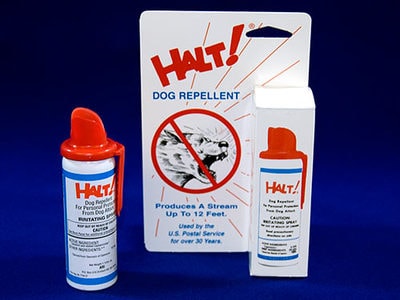
Carry dog deterrent spray. A citronella or capsaicin-based dog deterrent (not full-strength bear spray) clips to your handlebar bag and shoots 10 to 15 feet. It does not harm the dog permanently — it just ends the encounter fast.
- 5
Report loose dogs. If a dog is regularly loose on a trail or road, report it to animal control. You are not the only rider on that route, and the next person may not handle it as well.
Florida-Specific Wildlife: Gators, Turkeys, Cranes, and Hogs
If you ride in Florida, you are going to see wildlife. Most of it is completely indifferent to you. A few species are worth knowing about.
- 1
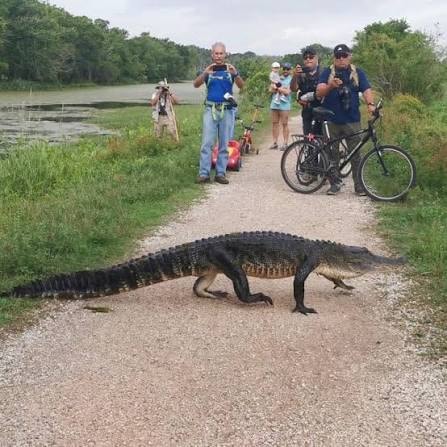
Alligators near the trail: give them a wide berth and keep moving. They are almost never aggressive toward cyclists unless you get between a female and her nest or corner one. If one is blocking the path, stop, wait, and let it move. Do not try to go around it through the grass — that is where the second one is!
- 2
Wild turkeys and sandhill cranes: they look harmless and they are, mostly. But during nesting season (spring through early summer) they will stand their ground and even bluff-charge. Slow down, give them space, and go around. Honking your bell or horn usually moves them along.
- 3
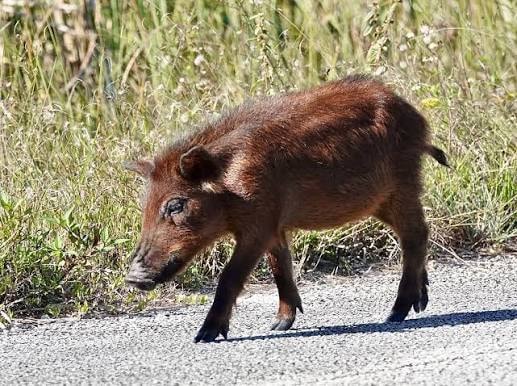
Wild hogs are everywhere in the wild. In Florida they are a nuisance animal and quite destructive of both farm and pasture land. If you see one, there are likely MANY more nearby. While piglets and sows are kind of cute, DO NOT APPROACH! They will be guarded by a very protective boar with sharp tusks and the will to use them. When they see you, they will scatter. It's the surprise when you round a corner that spooks them. Stay on your trike, stop and let them scatter.
- 4
Black bears (North Florida): Smaller than their brown, grizzly, and kodiak cousins are rare on paved trails but not unheard of in wooded areas. Black bear attacks are rare to the point of being almost non-existent as long as you understand this, "Black bears are WILD ANIMALS! Do not feed, try to pet, or in any way approach them. Make noise as you ride — a bell, a radio, conversation. Bears want to avoid you as much as you should want to avoid them.
What to Carry
You do not need to turn your trike into a survival vehicle. But a few items make a real difference.
- 1
Dog deterrent spray: citronella-based sprays like Halt! or Sabre Dog Spray are legal everywhere, safe for the animal, and effective. Mount it where you can grab it in two seconds without looking down.
- 2
A loud bell or air horn: useful for wildlife that just needs a startle to move along. Also good for alerting other trail users when an animal is blocking the path ahead.
- 3
A charged phone: if you are bitten, scratched, or knocked off the trike by an animal encounter, you need to be able to call for help. Ride with your phone accessible, not buried in a bag.
- 4
A basic first aid kit: dog bites and scratches from a fall can introduce bacteria fast. Antiseptic wipes, gauze, and medical tape weigh almost nothing and live permanently in your cargo bag.
If You Are Bitten or Injured
Animal bites are a medical situation, not just a trail inconvenience. Here is what to do:
- 1
Get distance from the animal first. Your safety comes before first aid.
- 2
Clean the wound immediately with water if you have it, then antiseptic. Dog bites in particular carry a high infection risk.
- 3
Call for help if the wound is deep, bleeding heavily, or on your face or hands. Do not try to ride home with a serious bite.
- 4
Report the incident. For dog bites, call animal control and give the location and a description of the dog. For wildlife, contact Florida Fish and Wildlife. Reporting protects the next rider.
- 5
See a doctor the same day, even for minor bites. Rabies post-exposure treatment is only effective when started promptly, and your doctor will advise whether it is needed.
"Most animals are not trying to hurt you. They are reacting to you. Slow down, stay calm, and give them a way out — and most encounters end with a good story, not a trip to urgent care."
I have had dozens of animal encounters over three years of riding. The vast majority were non-events — a deer bounding across the path, a turkey giving me the side-eye, a dog that barked from behind a fence and called it a day.
The ones that required action were manageable because I had thought through what I would do before I needed to do it. That is really the whole point. You cannot predict when it happens. You can absolutely prepare for it.