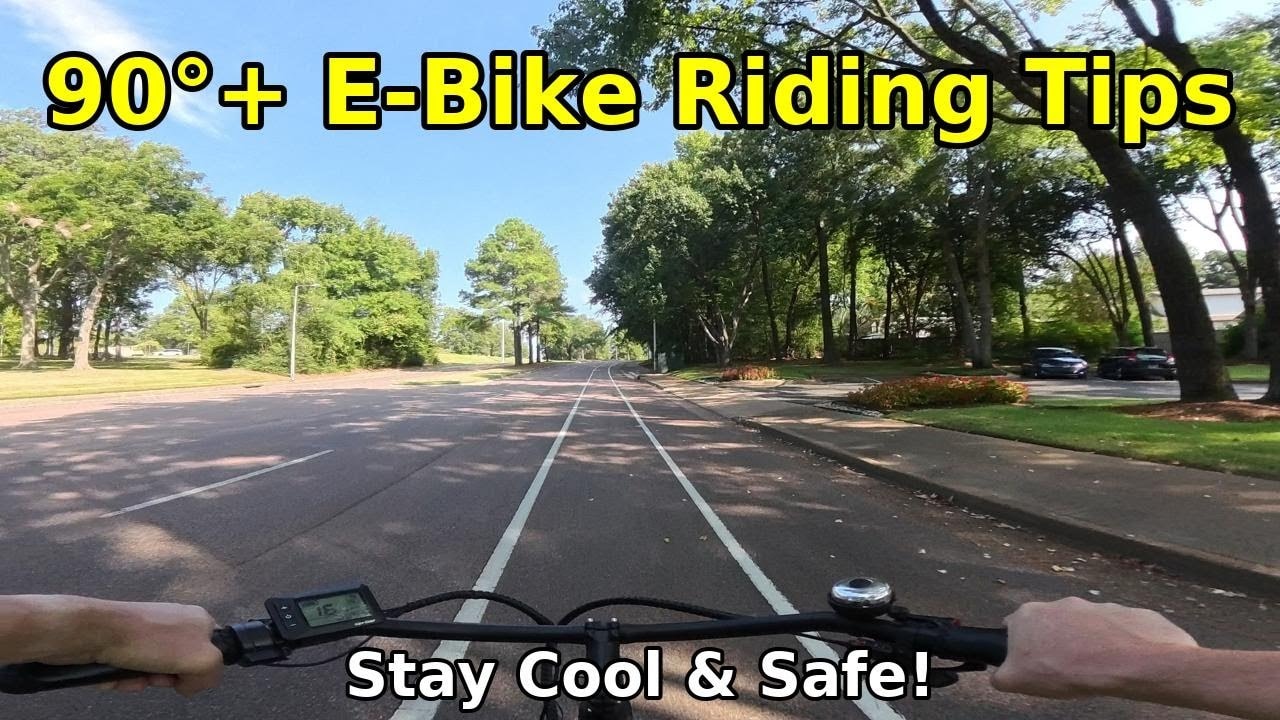
Riding in Summer Heat: Staying Safe When the Temperature Climbs
Heat affects older adults differently. These are the precautions I take every time I head out in summer — and the gear that's made a real difference.
I grew up in the South. I thought I knew heat. Then I turned 67 and discovered that the heat I'd been riding through for decades had quietly become a different animal. Older adults lose the ability to regulate body temperature as efficiently as younger people — our sweat response slows, our thirst signals lag behind our actual hydration needs, and medications many of us take can compound the problem. None of that means you stay inside from June through August. It means you ride smarter.
Understand why heat hits harder after 65
The physiology is worth knowing. As we age, the hypothalamus — the part of the brain that regulates body temperature — becomes less responsive. We start sweating later and less efficiently. Blood flow to the skin, which is how the body sheds heat, decreases. And because our kidneys are less efficient at conserving water, we dehydrate faster. Add in common medications — diuretics, beta-blockers, antihistamines, and certain blood pressure drugs all affect heat tolerance — and you have a body that is genuinely more vulnerable to heat stress than it was twenty years ago. This isn't weakness. It's biology. Knowing it lets you plan around it.
The timing rule I never break
I ride before 9am or after 6pm in July and August. Full stop. The temperature difference between a 7am ride and a noon ride on a summer day can be fifteen degrees or more, and the UV index at 7am is a fraction of what it is at midday. I know this sounds obvious. I also know how many people — including past me — push that window because the morning got away from them or the afternoon looked nice. Don't. The trail will still be there tomorrow morning. Heat exhaustion is not worth a Tuesday afternoon ride.
"By the time you feel thirsty, you're already mildly dehydrated. Drink before the signal arrives — not after."
Hydration: the math most people get wrong
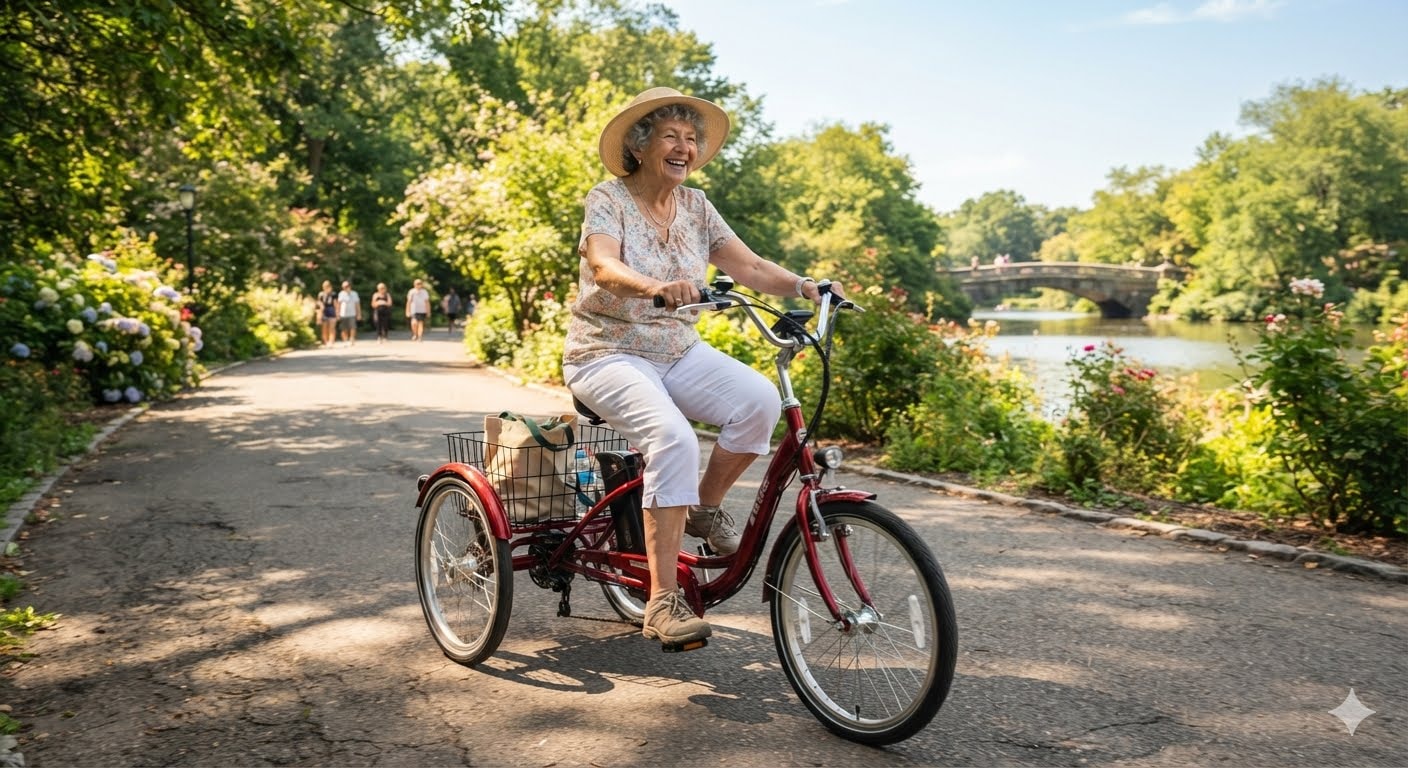
The standard advice is eight glasses of water a day. That's a baseline for sedentary living, not for outdoor exercise in summer heat. When I'm riding in warm weather, I drink 16 ounces of water in the hour before I leave, carry at least 24 ounces on the trike, and drink before I feel thirsty — because by the time you feel thirsty, you're already mildly dehydrated. On rides over an hour, I add an electrolyte packet to one of my bottles. Plain water doesn't replace the sodium and potassium you lose through sweat, and an electrolyte imbalance can cause cramping, dizziness, and in serious cases, hyponatremia. The electrolyte packets cost about fifty cents each. They're worth it.
What I wear and why
Light-colored, loose-fitting, moisture-wicking fabric. Not cotton — cotton holds sweat against your skin and actually makes you feel hotter as the ride goes on. A helmet with good ventilation. Sunglasses that wrap around the sides, not just cover the front. SPF 50 sunscreen on every exposed surface, reapplied if I'm out for more than 90 minutes. And the thing that made the biggest single difference: a small fan that runs off a USB battery pack. It sounds ridiculous. It works remarkably well on slow sections and rest stops.
Know the warning signs — and take them seriously
Heat exhaustion and heat stroke are not the same thing. Heat exhaustion — heavy sweating, weakness, cold or pale skin, a fast weak pulse, nausea — is serious but manageable: stop riding, get to shade, drink water, cool down. Heat stroke — high body temperature above 103°F, hot and red skin, rapid strong pulse, possible unconsciousness — is a medical emergency. Call 911. The line between them can be crossed faster than you'd expect, especially if you've been ignoring early warning signs. If you feel dizzy, confused, or stop sweating on a hot day, stop immediately. No ride is worth pushing through those signals.
My summer riding kit
- Moisture-wicking shirt in a light color — not cotton
- Well-ventilated helmet
- Wraparound sunglasses with UV protection
- SPF 50 sunscreen, reapplied every 90 minutes
- Insulated water bottle — keeps drinks cold for 6+ hours
- Electrolyte packets for rides over an hour
- USB fan for rest stops
- Phone with weather app — check the heat index, not just the temperature
Summer riding is some of the best riding of the year — early morning light, quiet trails, the smell of everything growing. You just have to do it with a little extra preparation. The heat isn't your enemy. Underestimating it is.
Keep reading
More trail stories, gear guides, and honest talk about staying active at this age.