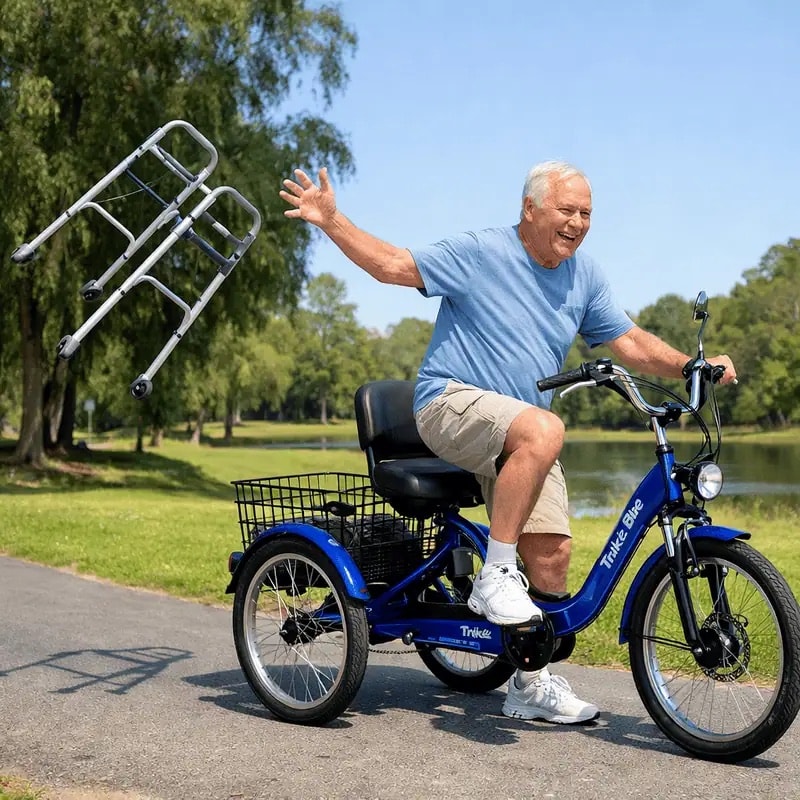
After major surgery, the urge to feel like yourself again can be powerful. You may be ready for fresh air, a little independence, and movement that does not feel like another appointment. An e-trike can be a promising option for some people because it offers seated, low-impact activity with balance support and adjustable electric assistance.
But “promising” is not the same as “right for everyone.” Recovery plans are personal, and the safest next step is always the one your surgeon, physical therapist, or cardiac rehabilitation team approves. Think of an e-trike as a possible tool in a bigger plan — not a shortcut, not a test of toughness, and never a replacement for medical guidance.
Why an E-Trike Can Be Appealing During Recovery
Traditional cycling asks you to balance, mount and dismount confidently, and react quickly if you wobble. An e-trike removes much of that balancing demand. Three wheels provide a stable platform at stops, and a step-through frame can make getting on and off less intimidating for people whose strength or range of motion is still returning.
The electric assist is another useful feature. You still pedal, but you can choose how much help you receive. On a good day, you may contribute more. On a tired day, a higher assist level can help you get home without turning a gentle outing into an exhausting one. That flexibility can make it easier to keep activity within the limits your care team has set.
- Stable three-wheel support can reduce the fear of balancing at a stop.
- A comfortable seat and upright position may be easier on sore joints than many other forms of exercise.
- Pedal assist lets you control effort on hills, into wind, or when fatigue shows up early.
- A basket or rear rack can carry water, medications, a phone, and any recovery essentials without loading your body down.
Potential Benefits — When Your Care Team Says You’re Ready
Once you have been cleared for this kind of activity, short, easy e-trike rides may support several parts of recovery. The goal is not to chase miles or speed. The goal is to add safe, repeatable movement to your week and notice how your body responds.
- Gentle aerobic activity may support circulation, stamina, and day-to-day energy.
- Regular movement can help rebuild confidence after a long stretch of being careful or inactive.
- Getting outdoors may lift mood and reduce the cabin-fever feeling that can come with recovery.
- A predictable route and a familiar routine can make it easier to stay consistent with activity.
- Riding with a trusted friend or group can add encouragement and a practical safety net.
Get Medical Clearance Before You Ride
This is the non-negotiable part. Major surgery can affect your heart, lungs, incision healing, balance, blood pressure, medication needs, and ability to react safely. Your care team knows the details that a general article never can.
Bring the idea up at a follow-up appointment. Be specific: explain that you are considering a seated electric tricycle on flat, low-traffic paths, and ask what level of effort, duration, and timing would be appropriate for you. If you are working with physical therapy or cardiac rehab, they may even help you practice the movements involved in mounting, pedaling, braking, and turning.
- Ask when you may begin outdoor cycling or comparable aerobic activity.
- Ask about heart-rate, exertion, lifting, or incision-related restrictions.
- Review medications that can affect balance, hydration, blood pressure, or sun sensitivity.
- Ask what symptoms mean “stop now” and when to call the office or seek urgent care.
- Confirm whether you should ride alone at first or bring a companion.
Start Smaller Than You Think You Need To
The first ride is not a graduation ceremony. It is simply information. Choose a smooth, flat, familiar path close to home or a trailhead with easy parking. Ride at a conversational pace, use plenty of assist, and turn around while you still feel good.
A useful rule is to finish with something left in the tank. Recovery is built by repeating manageable efforts, not by proving you can push through a hard day. Keep a simple note after each ride: how long you rode, how hard it felt, and how you felt later that day and the next morning. That record can help you and your care team spot a pace that is working.
- Begin with a short, flat route and a clear turnaround point.
- Use a higher assist setting than your pride thinks you need.
- Build duration gradually only after you tolerate the current level well.
- Schedule rest days and treat unusual fatigue as useful feedback.
- Avoid heat, strong wind, busy roads, and complicated intersections early on.
Set Up the Trike for Comfort and Control
A good fit matters more during recovery because small discomforts can become big distractions. Before heading out, make sure you can sit down and stand up without twisting or straining. Your feet should reach the pedals comfortably, your hands should rest naturally on the grips, and you should be able to reach the brakes without stretching.
If possible, have a knowledgeable bike shop help with the initial setup. They can adjust the seat, handlebars, brake reach, tire pressure, and accessory placement. A mirror, bright lights, a bell, and a phone mount can make a calm ride feel more manageable without adding complexity.
- Choose a step-through frame if lifting a leg over a bar is difficult.
- Practice mounting, dismounting, braking, and turning in an empty parking lot first.
- Keep the seat position comfortable rather than aggressively athletic.
- Carry water, identification, a charged phone, and any clinician-recommended essentials.
- Use a helmet every ride, even on a short neighborhood loop.
Know When to Stop
Your body gets the final vote. Stop riding immediately if you develop chest discomfort, unusual shortness of breath, dizziness, faintness, new weakness, palpitations, severe pain, or any symptom your care team has told you to watch for. Do not try to “ride it off.” Call for help or follow the plan your clinician gave you.
Less dramatic signals matter too. If a ride leaves you wiped out for the rest of the day, worsens pain around an incision, or makes the next day noticeably harder, scale back and check in with your care team. Progress is not always a straight line, and adjusting the plan is part of doing recovery well.
- Stop for symptoms that are new, severe, or different from your usual recovery experience.
- Do not ride through dizziness, chest symptoms, or sudden breathlessness.
- Keep emergency contact information with you.
- Tell a trusted person where you are going and when you expect to return.
- When in doubt, pause and ask your clinician before the next ride.
Make the Ride Part of the Bigger Picture
An e-trike works best when it supports the plan you already have: follow-up care, prescribed therapy, good sleep, nutrition, medication routines, and realistic rest. It can be the enjoyable piece that gets you outside and moving, but it should fit around the priorities your medical team has set.
For many of us, recovery is not about getting back to exactly who we were before. It is about building a life that works well now. If an e-trike helps you move safely, see more of your neighborhood, and feel a little more like yourself again, that is a meaningful win.
- Treat each ride as one part of recovery, not the whole plan.
- Share your progress and concerns at follow-up appointments.
- Celebrate consistency, comfort, and confidence — not just distance.
- Invite a friend along when you are ready for company.
- Keep the experience enjoyable enough that you want to do it again.
A Gentle Way Forward
An e-trike may offer a practical bridge between “I need to be careful” and “I want to be active again.” With medical clearance, a conservative start, and the right setup, it can be a comfortable way to add movement, fresh air, and confidence to an overall recovery plan.
Talk with your care team first, start small, and let your body set the pace. There is no prize for rushing recovery — but there is a lot to be gained from finding a safe way to keep moving forward.