
Not every great trail starts at your front door. Some of the best riding in Florida — and across the country — sits 30, 60, even 90 miles away. And while an e-trike handles beautifully on a paved path, it is not exactly built for highway speeds.
So at some point, you have to figure out how to get the trike to the trail. That is easier said than done when you are dealing with a machine that weighs 65 to 90 pounds, sits low to the ground, and is wider than a standard two-wheeler. I have tried a few approaches over the years. Here is what I have learned.
First: Know Your Trike's Weight
Before you buy a carrier or back a trailer into the driveway, look up your trike's actual weight — not the estimate in your head. Most adult e-trikes run 65 to 90 lbs without the battery. Add the battery (typically 10 to 15 lbs) and any cargo bags and you could be pushing 100 lbs or more. Every transport method below has a weight rating. Exceed it and you are asking for a bad day on the highway.
Truck Bed
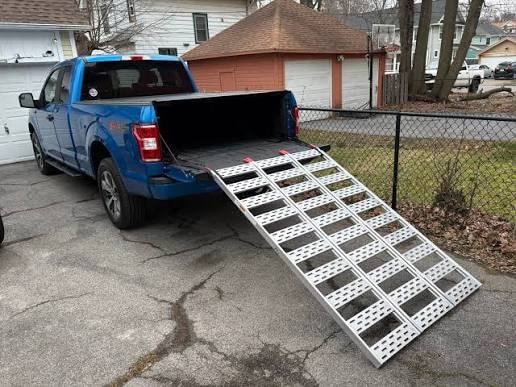
Works well when…
- No extra equipment to buy if you already own a truck
- Low loading height compared to a roof rack
- Trike stays visible so you can check straps at rest stops
Watch out for…
- Most trikes are too wide to fit with the tailgate up — measure first
- You need at least four tie-down straps and solid anchor points
- Rain and road grime hit the trike directly
Practical tips
- 1
Measure your truck bed width before assuming it will fit. A standard short bed is about 50 inches wide inside the wheel wells. Many e-trikes run 28 to 36 inches wide — they fit, but snugly.
- 2
Use four ratchet straps minimum: two at the front axle area, two at the rear. Run them in an X pattern so the trike cannot shift forward, backward, or side to side.
- 3
Remove the battery before loading. It protects the battery from vibration and road shock, and it makes the trike meaningfully lighter when you are lifting it in.
- 4
If the tailgate won't close, use a red flag or a safety light on the rear of the trike. Check your state's laws on load overhang — most allow up to 4 feet beyond the bumper with a flag.
Hitch-Mounted Carrier
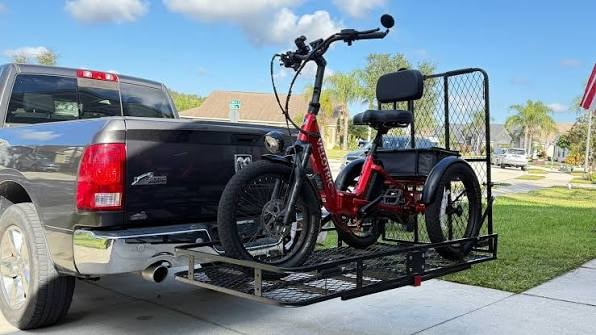
Works well when…
- Works with most SUVs, minivans, and trucks that have a 2-inch receiver hitch
- No ramp needed — trike rolls on at ground level
- Keeps the vehicle interior clean
Watch out for…
- Most standard hitch racks are not rated for e-trike weight — check carefully
- Trike width can exceed the carrier platform on some models
- Rear visibility and backup cameras can be blocked
Practical tips
- 1
Look for a platform-style hitch carrier rated for at least 160 lbs — not a hanging rack. Hanging racks are designed for standard bikes and will flex or fail under e-trike weight.
- 2
Confirm the platform width accommodates your trike's rear axle span. Some carriers have adjustable arms; others are fixed. Measure both before ordering.
- 3
Adding a hitch stabilizer or anti-wobble device could be a good option, depending on how far and how often you take trips. Even a well-rated carrier will sway at highway speed without one, and that movement stresses both the hitch and the trike frame over time.
- 4
Use a trailer light adapter so your brake lights and turn signals show through. In most states it is legally required when the carrier blocks your vehicle's rear lights.
Utility Trailer
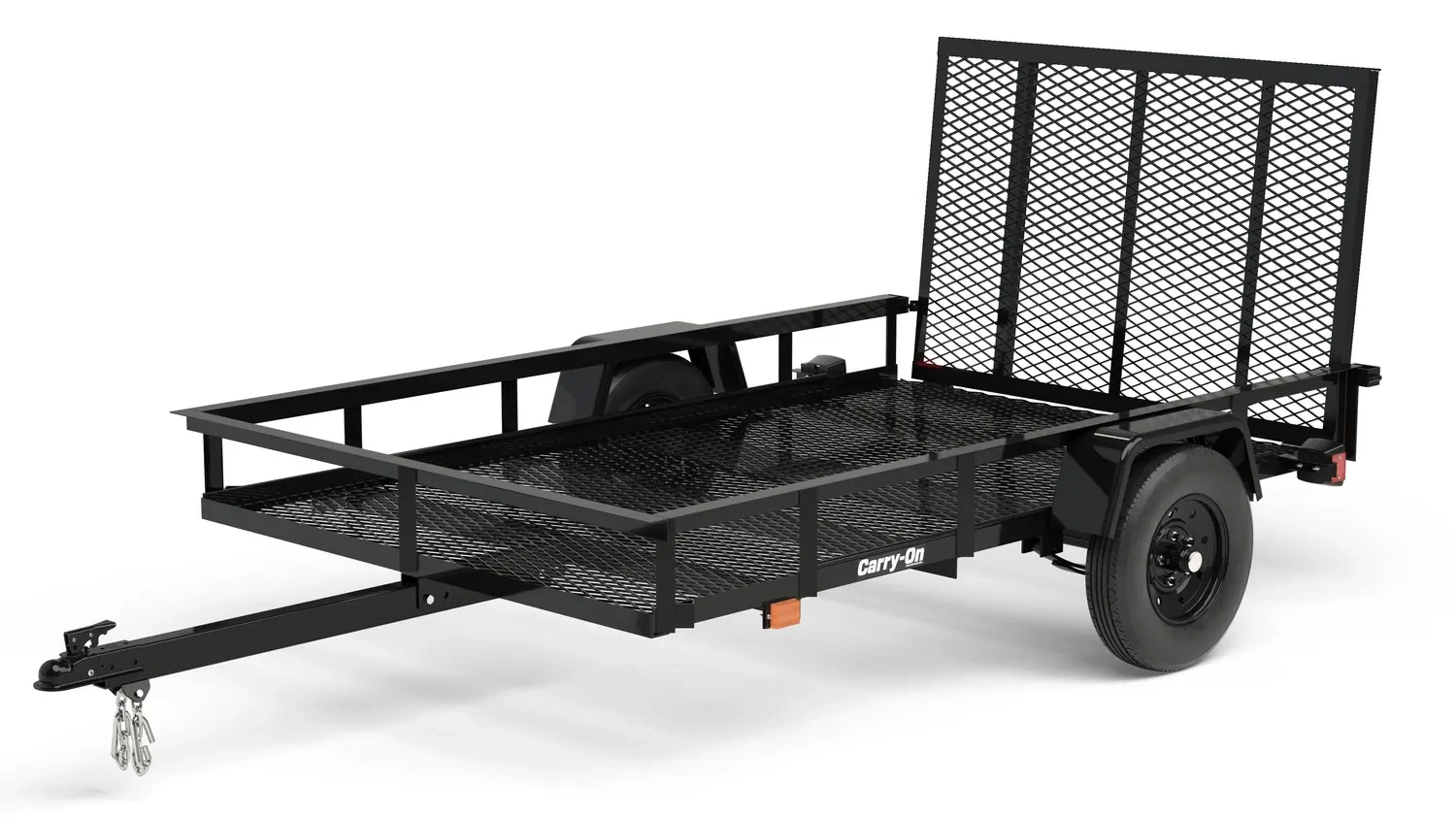
Works well when…
- Handles the most weight with the least stress
- Room for two trikes, gear bags, and a cooler
- Use a tarp to cover will keep the trike mostly protected from road debris
Watch out for…
- Requires a hitch and trailer wiring on your vehicle
- Parking and maneuvering take practice
- Storage at home requires space
Practical tips
- 1
A 5x8 utility trailer is the sweet spot for a pair or a single e-trike. It is small enough to tow with most vehicles, easy to back into a parking spot, and wide enough to load without gymnastics. The trailered pictured above has a 1600 lb limit and is enough for just about anything you want to take along.
- 2
Build or buy a simple wooden deck with wheel chocks. A trike sitting flat on a metal trailer bed will slide. Chocks hold the front wheel in place so your straps do the rest.
- 3
Use a ramp to load — do not try to lift a 90-pound trike onto a trailer deck. A pair of aluminum loading ramps rated for 1,000 lbs or more will serve you for years.
- 4
Check trailer tire pressure every trip. Trailer tires sit for weeks between uses and lose pressure faster than vehicle tires. A blowout at 60 mph with a loaded trailer is not a fun experience.
SUV or Van with a Ramp

Works well when…
- Trike is fully enclosed and protected from weather
- No trailer registration or extra insurance needed
- Works well for minivans, full-size vans, and large SUVs with fold-flat seats
Watch out for…
- Requires a sturdy ramp rated for the trike's weight
- Interior cargo area must be long enough — most trikes run 55 to 65 inches
- Loading solo takes practice and a good ramp angle
Practical tips
- 1
Measure your cargo floor length with the rear seats folded. You need at least 60 inches for most e-trikes. A minivan or full-size van is ideal; a standard mid-size SUV usually falls short.
- 2
Use a telescoping aluminum ramp rated for at least 400 lbs. Set it at a shallow angle — the steeper the ramp, the harder the push and the more likely the trike tips sideways.
- 3
Lay down a rubber mat or moving blanket on the cargo floor. It protects the vehicle interior and gives the trike tires something to grip so it doesn't roll forward during the drive.
- 4
Strap the trike to the vehicle's cargo anchor points even inside the vehicle. A hard stop can send an unsecured 90-pound trike straight into the back of your seats.
Battery Safety on Every Trip
Regardless of which method you use, the battery deserves its own checklist.
Remove the battery from the trike before transport whenever possible. It reduces weight during loading and protects the battery from vibration and temperature swings.
Never transport a lithium battery in a fully enclosed hot space — like a sealed trunk on a summer day. Heat degrades battery cells and, in extreme cases, creates a fire risk. Keep it in the passenger cabin with the AC running, or in a ventilated cargo area.
Check the charge level before you leave. Arriving at a trailhead with a half-charged battery because you forgot to plug in the night before is a frustrating way to start a ride.
Carry the battery in a padded bag or case. Road vibration over a long drive can loosen connections and stress the casing. A simple neoprene sleeve makes a real difference.
At the Trailhead: The Unload Checklist

- 1
Park on level ground before unloading. A sloped parking lot and a 90-pound trike on a ramp is a combination that ends badly.
- 2
Reinstall the battery and check the connection before you release the straps. It is easier to troubleshoot a battery issue before the trike is on the ground.
- 3
Walk around the trike and check for anything that shifted or loosened in transit — handlebars, seat, cargo bags, mirror mounts.
- 4
Lock your vehicle and stow your ramp or carrier hardware before you ride. Coming back to find your ramp stolen because you left it leaning against the trailer is a real thing that happens.
Getting your trike to the trail takes a little more planning than tossing a standard bike in the back of a car. But once you have a system dialed in — the right carrier, a practiced loading routine, and a pre-trip checklist — it becomes second nature.
The trails that are worth the drive are almost always worth the effort. Do not let logistics be the reason you never get there.